
iCaur V23: Bringer of Smiles



“What was the last car that actually made us smile?” That’s the question that popped into our heads somewhere in the middle of this review.
Now, we don’t mean the grin you get when the throttle pins you to your seat, or the smug little smirk that comes from swiping across a giant touchscreen. We’re talking about the kind of smile that creeps up on you and refuses to leave.


The kind that isn’t about speed, power, or features. It’s more about knowing that the car we’re driving has a sense of character—a charm that might not make it the most practical or the best in outright performance, but still makes us happy to be in it.
The last time a car did that for us was the tiny MG Comet. And now, sitting behind the wheel of the Chery iCaur V23 (yes, iCaur with a “u,” a creative workaround to avoid a certain fruity tech company’s lawyers), that same smile found its way back across our faces.
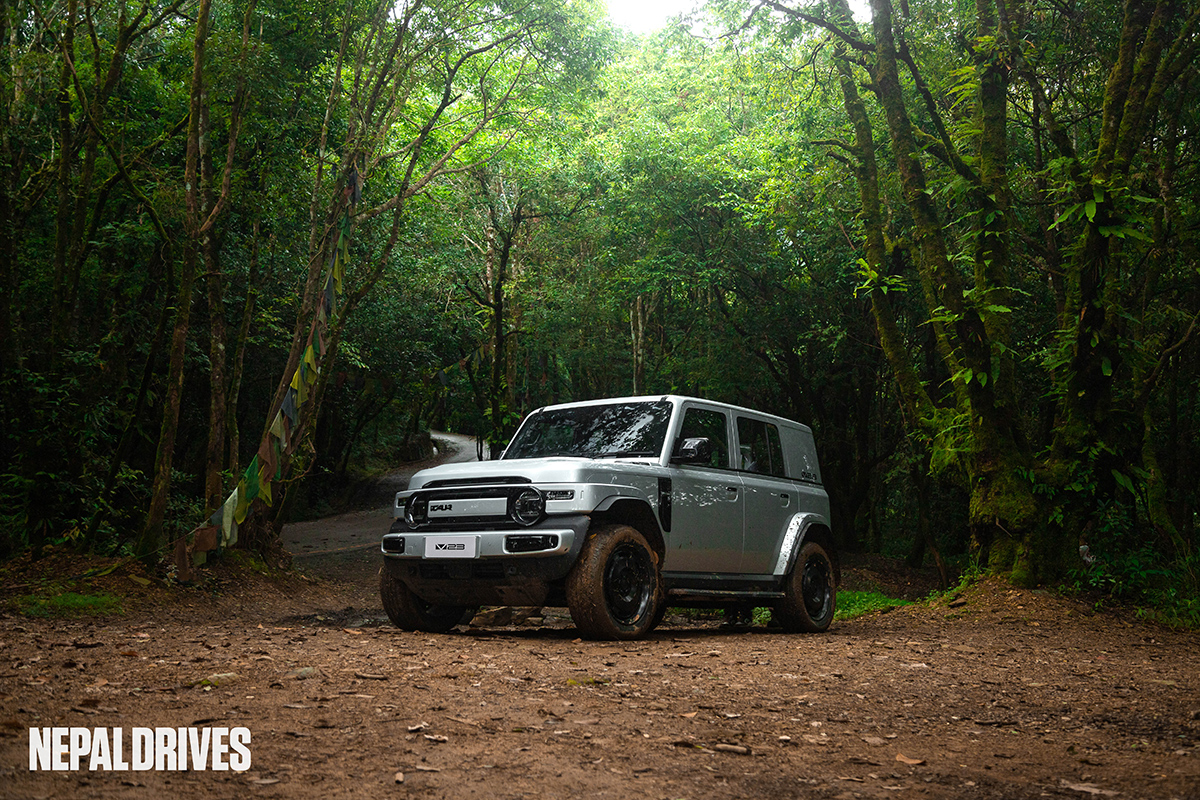
IS THAT A BABY JIMNY / DEFENDER / G-WAGON?
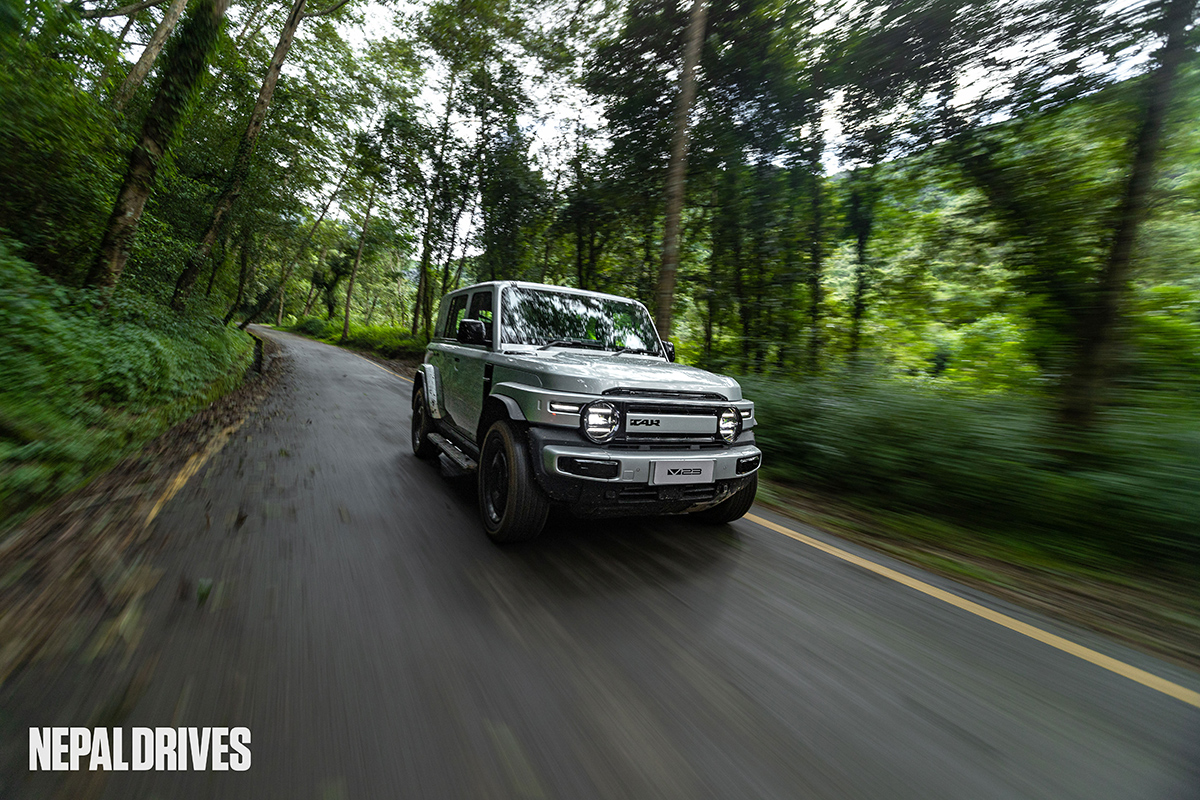
Nothing comes close to what the iCaur V23 looks like, and that’s quite a statement in this age of extravagantly designed EVs. It rides high and embraces bold, square proportions, making it one of the boxiest EVs out there.
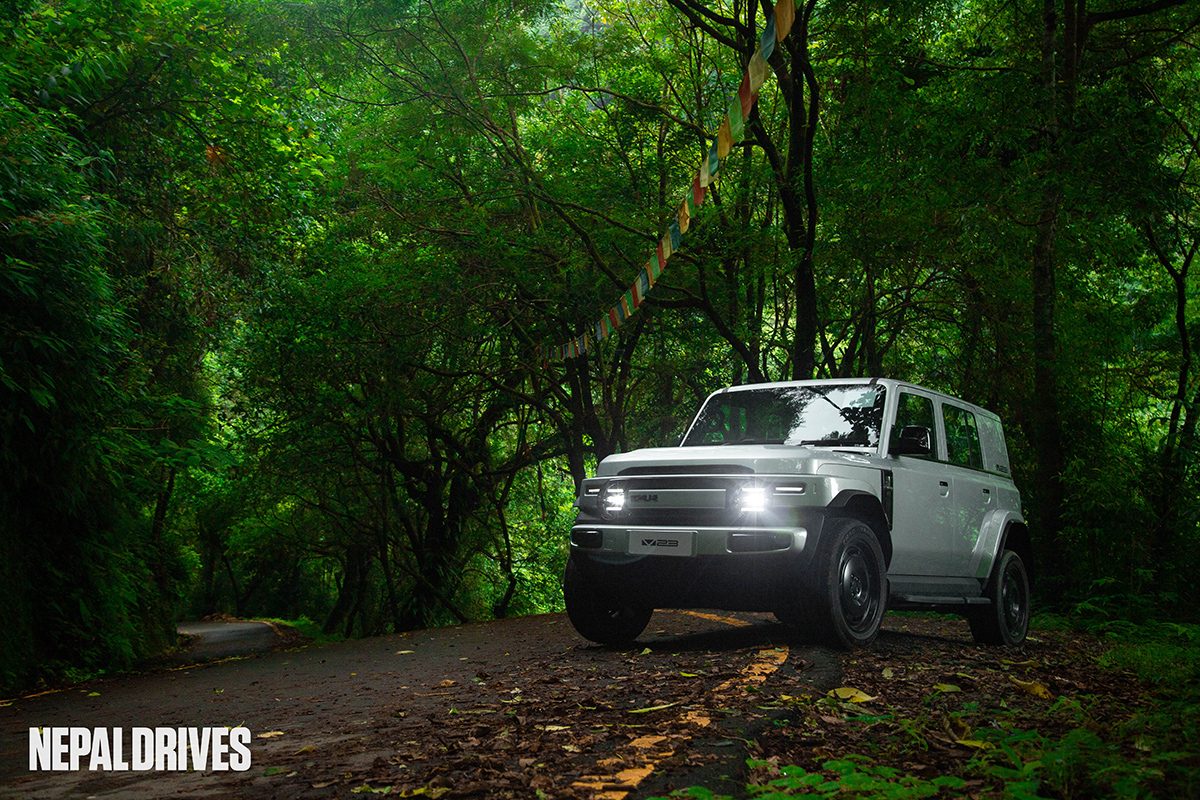
It also feels genuinely utilitarian. The hard plastic fenders over the wheels are there because you’re likely to pick up scrapes and scratches when driving off-road. Similarly, with an approach angle of 43 degrees, a departure angle of 41 degrees, and 205 mm of ground clearance, it’s built to tackle obstacles with confidence. If geometry alone dictated off-road ability, we’d rarely be turning around in this thing.
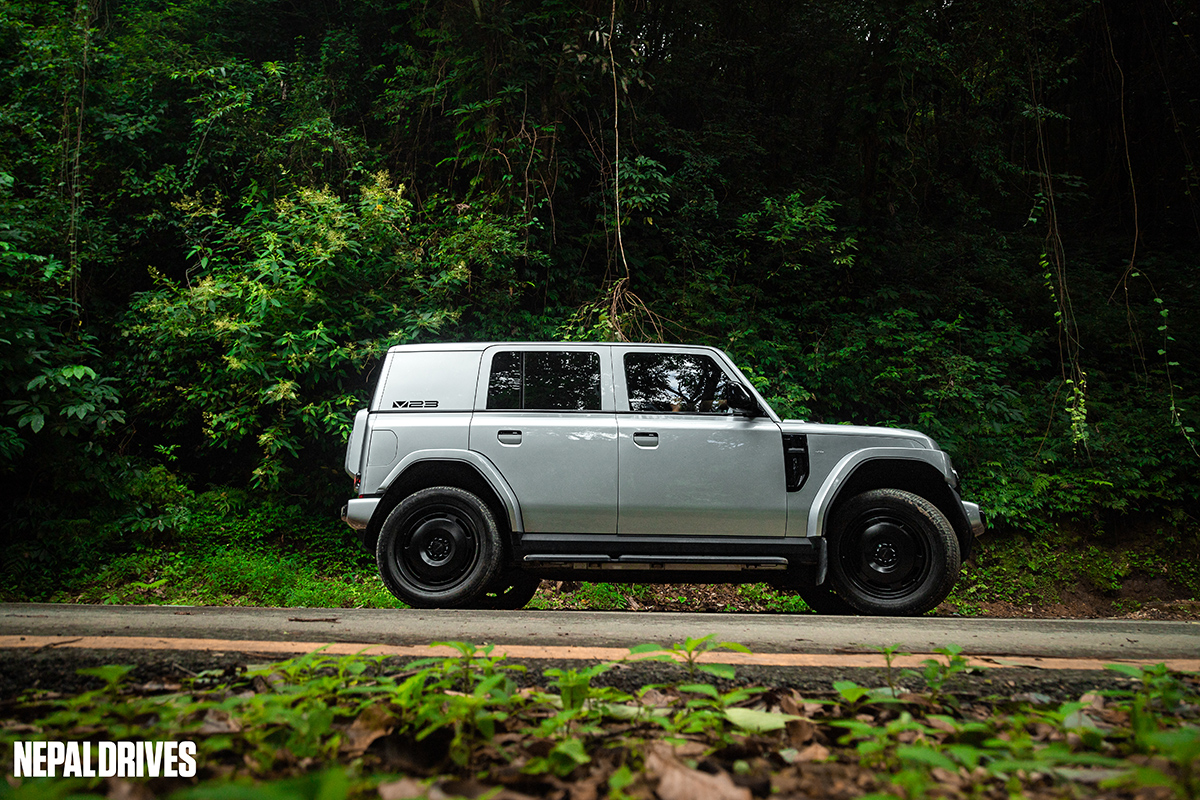
We also like the steel rims—they add to the rugged character. However, the stock tyres they come with are disappointing. More on that later.
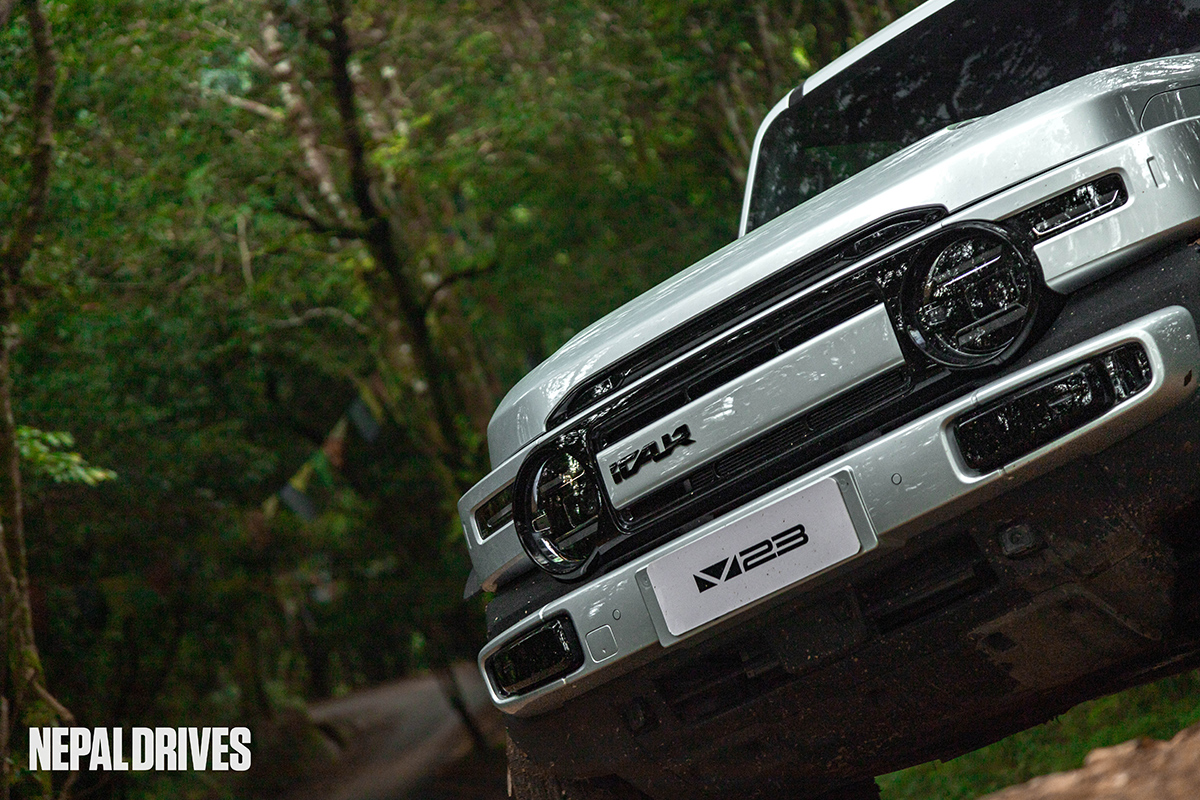
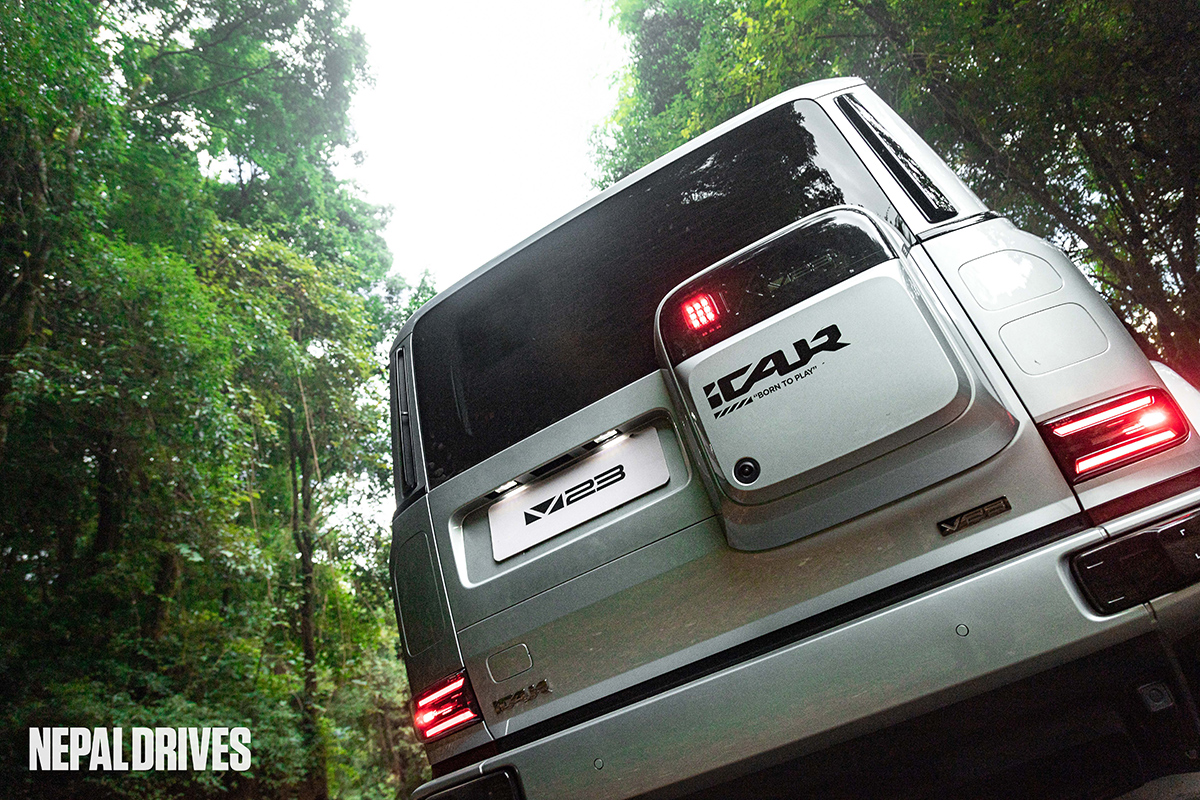
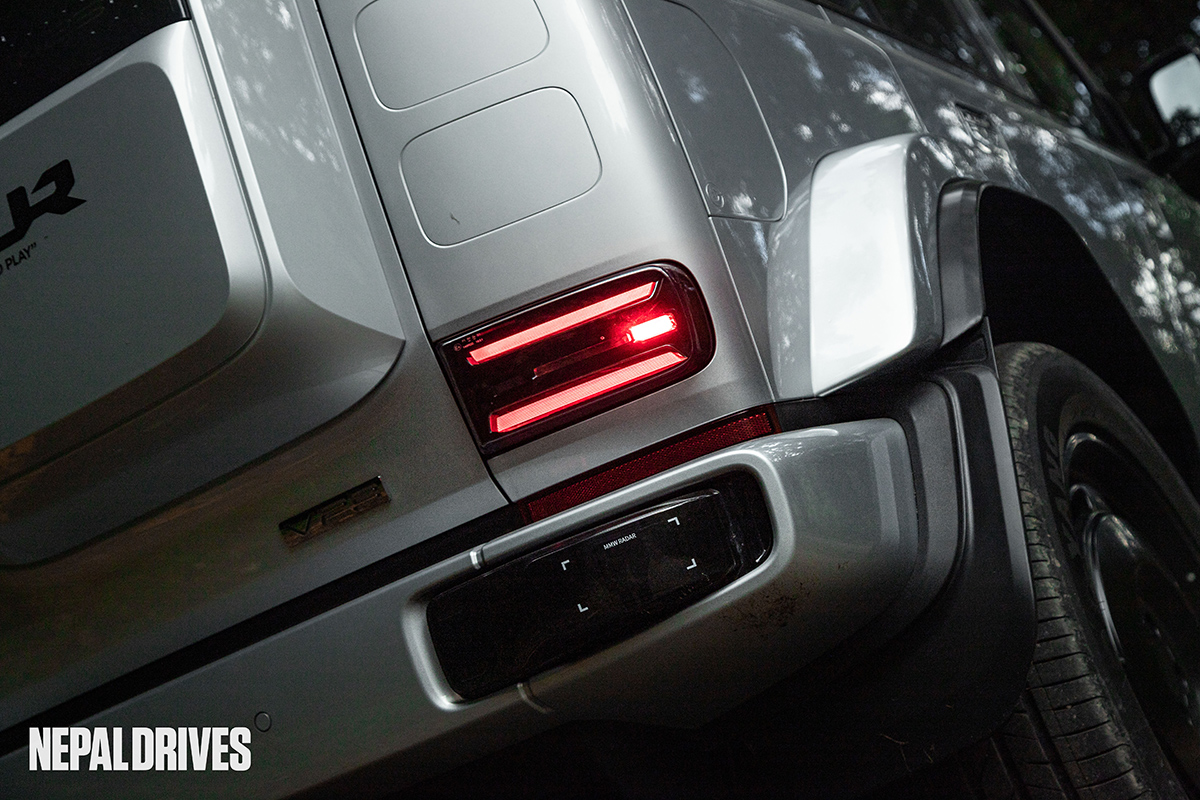
The profile is unapologetically boxy. You get flush door handles, but they’re not electronically deployed—just simple, manual units that work well while keeping the design clean.
At the rear, the squared-off styling continues. There’s a small storage compartment where you’d typically find a spare tyre in older SUVs, and the tailgate swings outward—something to keep in mind when parking close to a wall.

RETRO, MINIMAL, OFF-ROAD-ISH INTERIOR
As expected, you sit quite high in the V23, which gives a commanding view of the road (or trail) ahead. This is particularly useful when navigating uneven terrain. However, visibility isn’t perfect.
The outside rear-view mirror is a weak point—it’s vertically oriented but too small, with limited adjustability, making it of little use in our driving position. That’s a safety concern that needs addressing. That said, the car we drove was a demo unit, so there’s a chance production versions will improve on this.
Now, onto the positives—which are plenty.
Comparisons with the Jimny are inevitable, but in terms of interior space and front-seat comfort, the iCaur V23 comes out ahead. The rear seat is best suited for two (as the dual headrests suggest), though a third passenger can squeeze in if necessary.
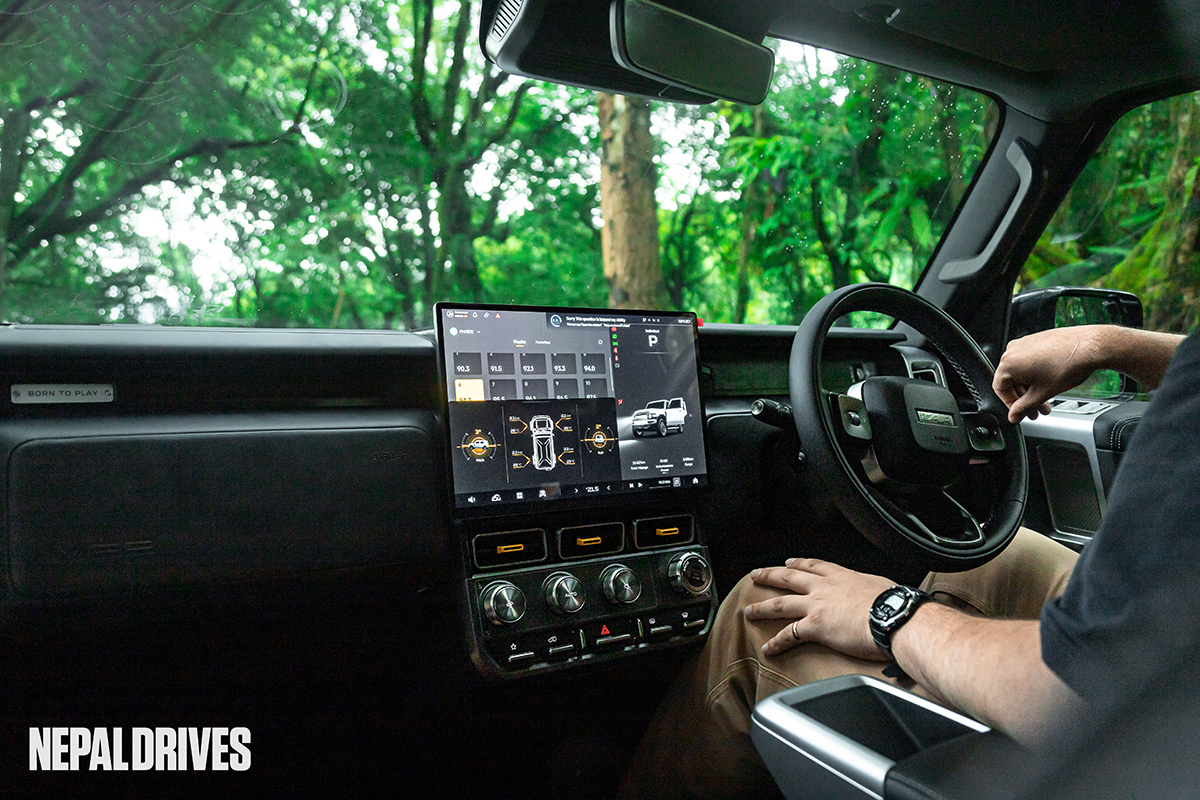
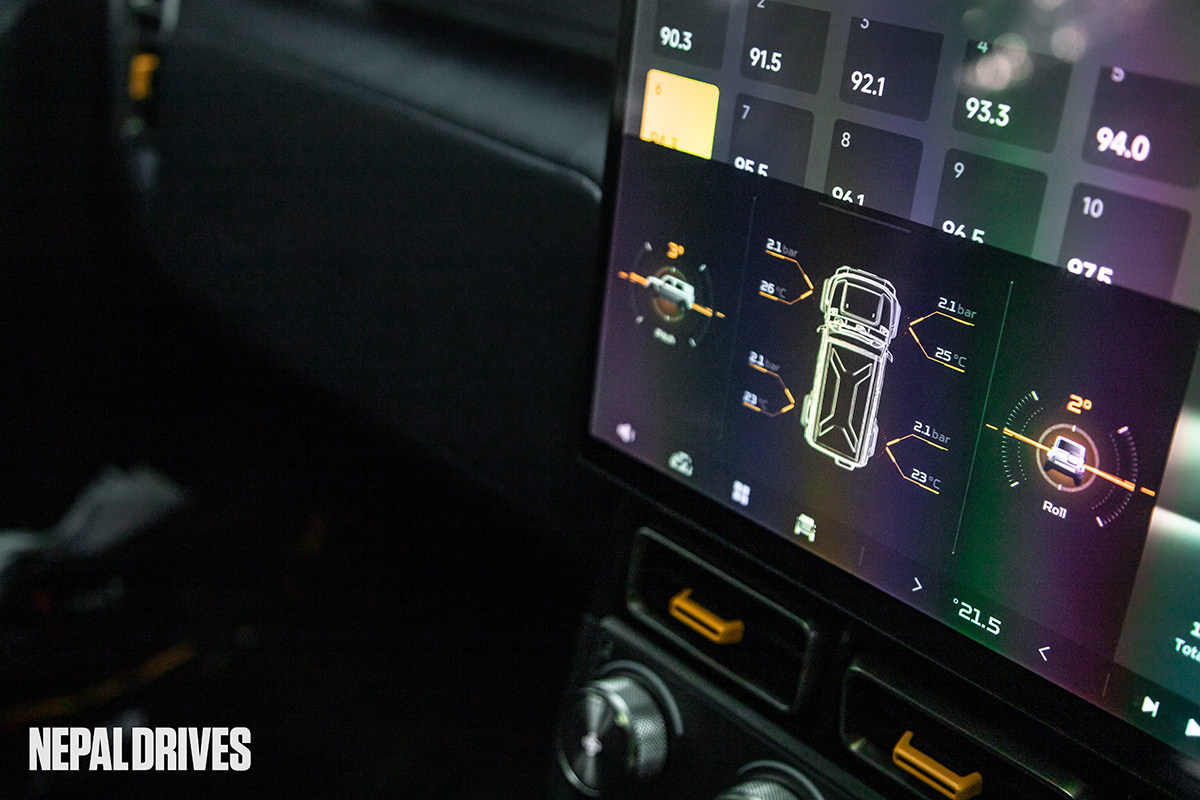
Up front, there’s a welcome mix of tech and usability. You get physical buttons and knobs for key functions and drive modes—an important detail in a car that’s meant to be used off-road. Trying to operate a touchscreen while bouncing over rocks is far from ideal.
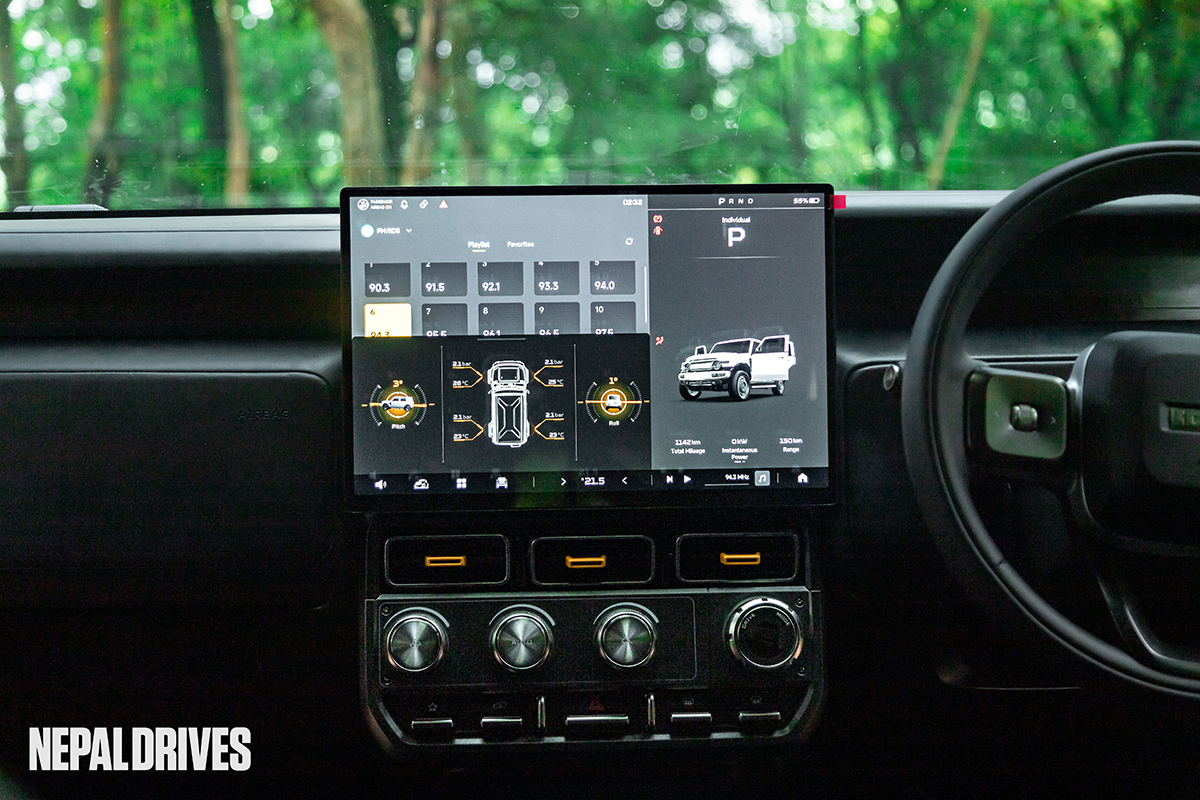
There is, of course, a touchscreen—a 15.4-inch unit powered by a Qualcomm Snapdragon 8155 chip. The camera feed is sharp, and there are neat inclinometers to show vehicle angles and ensure you’re still shiny side up.
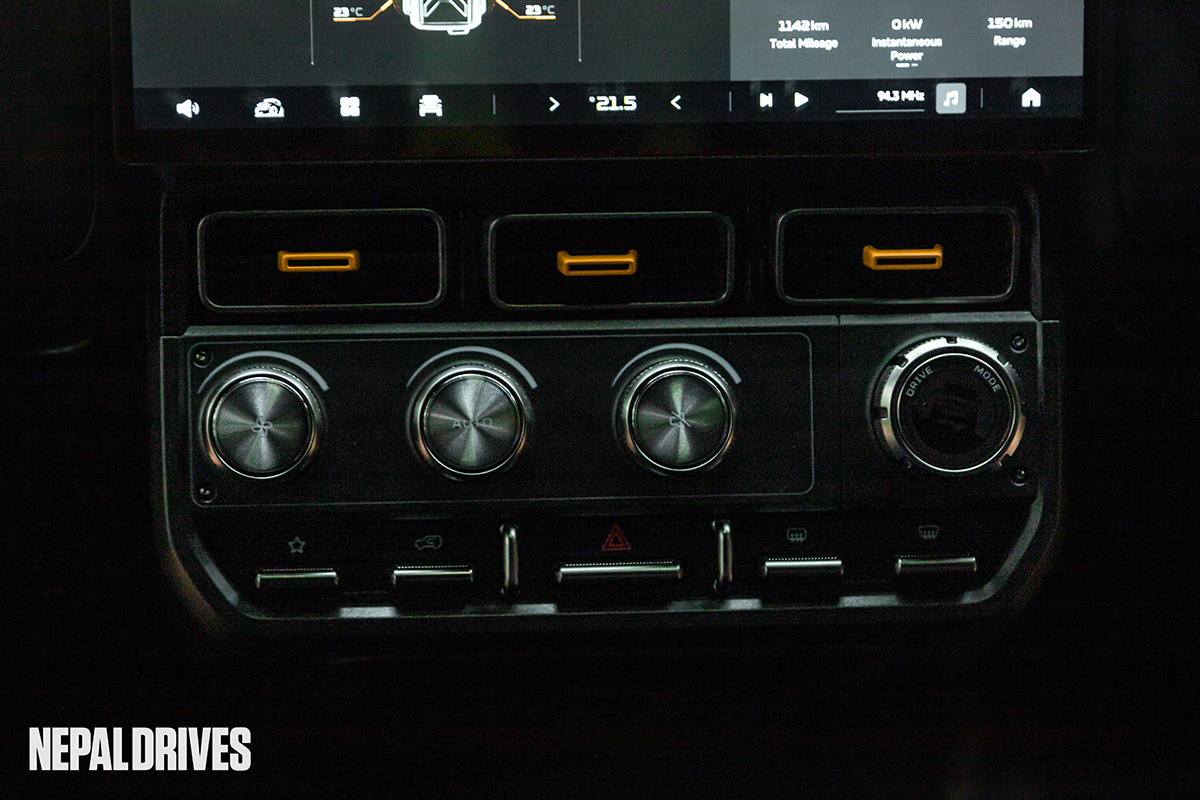
However, there’s no dedicated driver’s instrument cluster. You have to glance at the central screen for speed and range. It works, but it’s not ideal—especially when sunlight hits the display at the wrong angle.
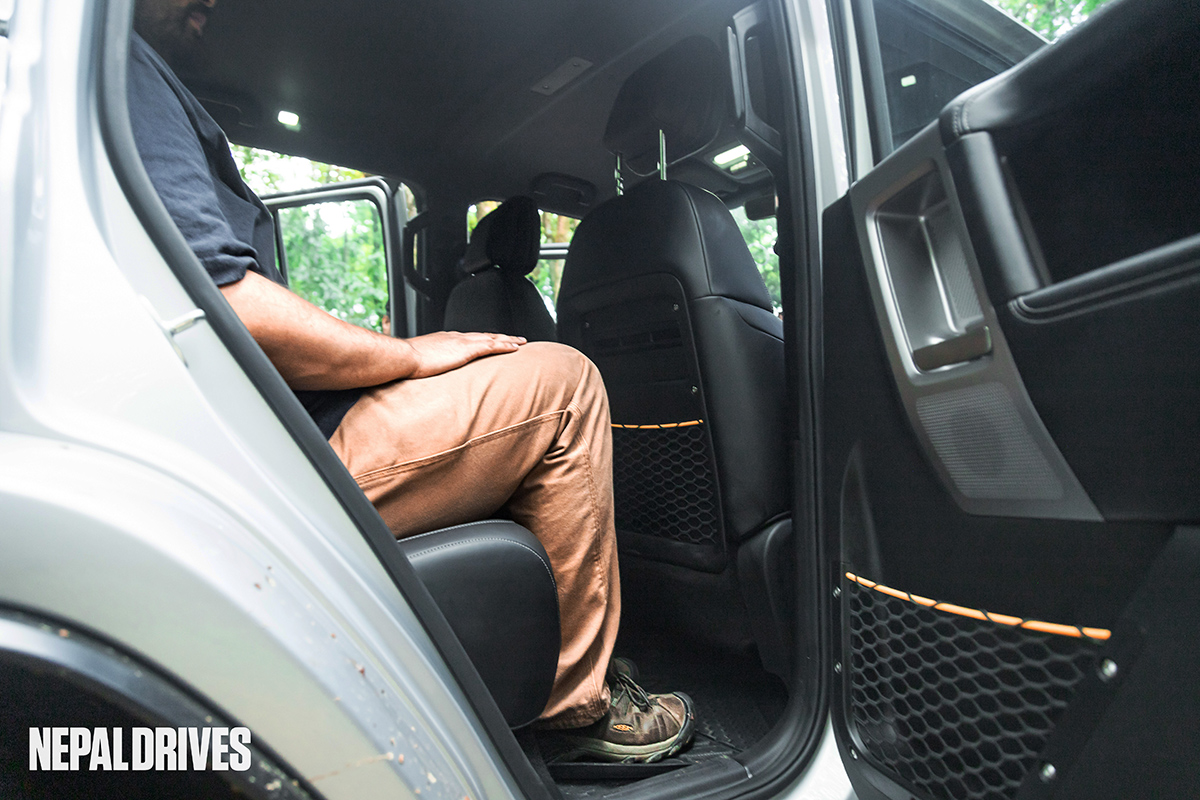
In terms of practicality, you get 774 litres of cargo space with the rear seats folded flat, which is quite respectable. What’s less impressive, though, are those stock tyres.
SLUSH AND MUD
This is where things don’t go entirely to plan. Power isn’t the issue. With a rear-wheel-drive setup producing 100 kW and 180 Nm, the V23 has adequate performance for what it’s designed to be. Anyone with realistic expectations will understand that this isn’t a tarmac-focused performance machine—and that’s perfectly fine.
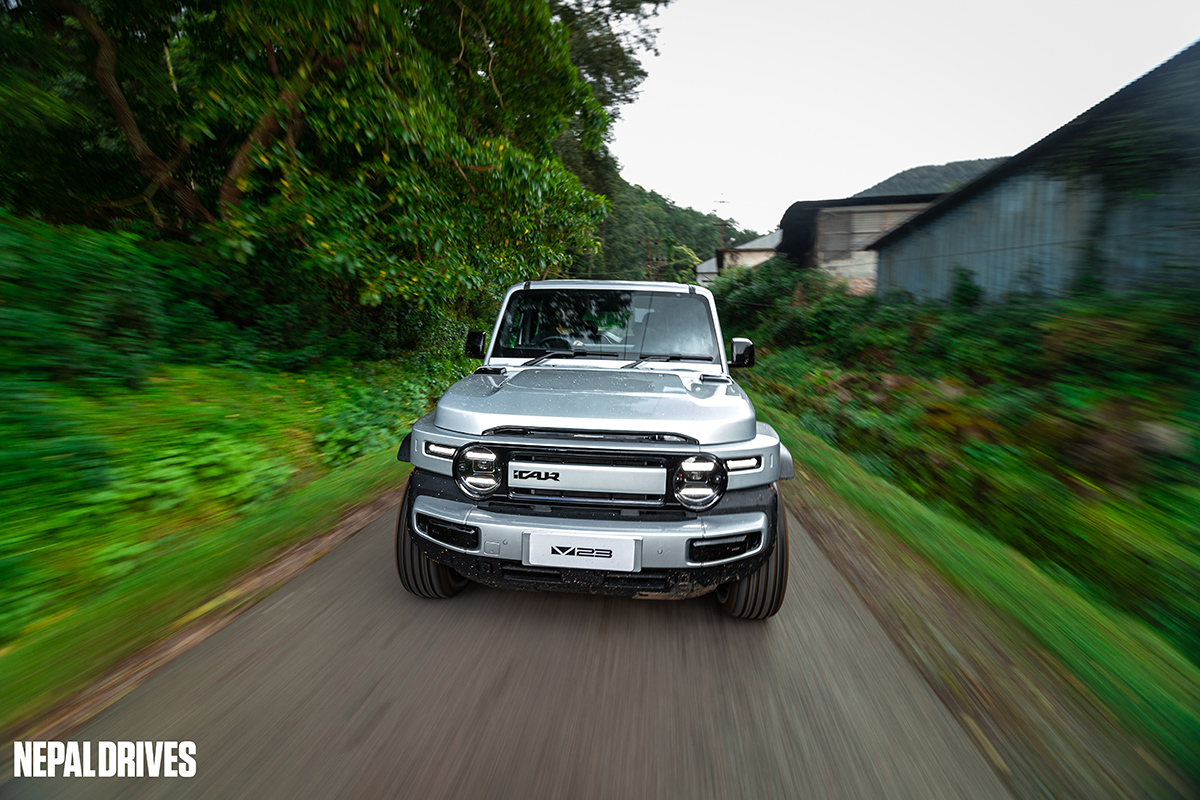
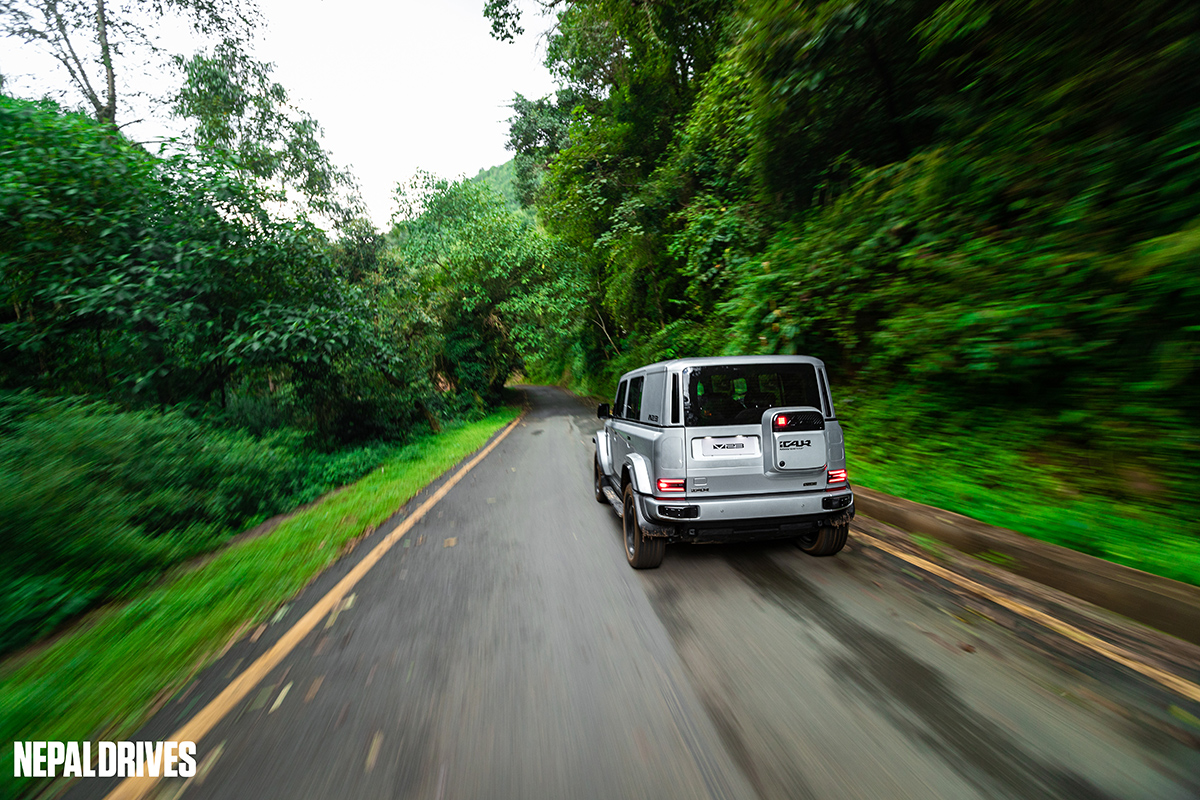
The suspension leans toward the softer side, absorbing bumps and rough roads with confidence. Yes, there’s body roll, but never to the point of being unsettling. On sweeping bends, you’ll feel it lean, but in daily use and over broken surfaces, that softness is actually a benefit.
Range comes from a 59.93 kWh LFP battery supplied by CATL, with a claimed CLTC range of 401 km. Realistically, we’d expect around 300–325 km. More range would always be welcome.
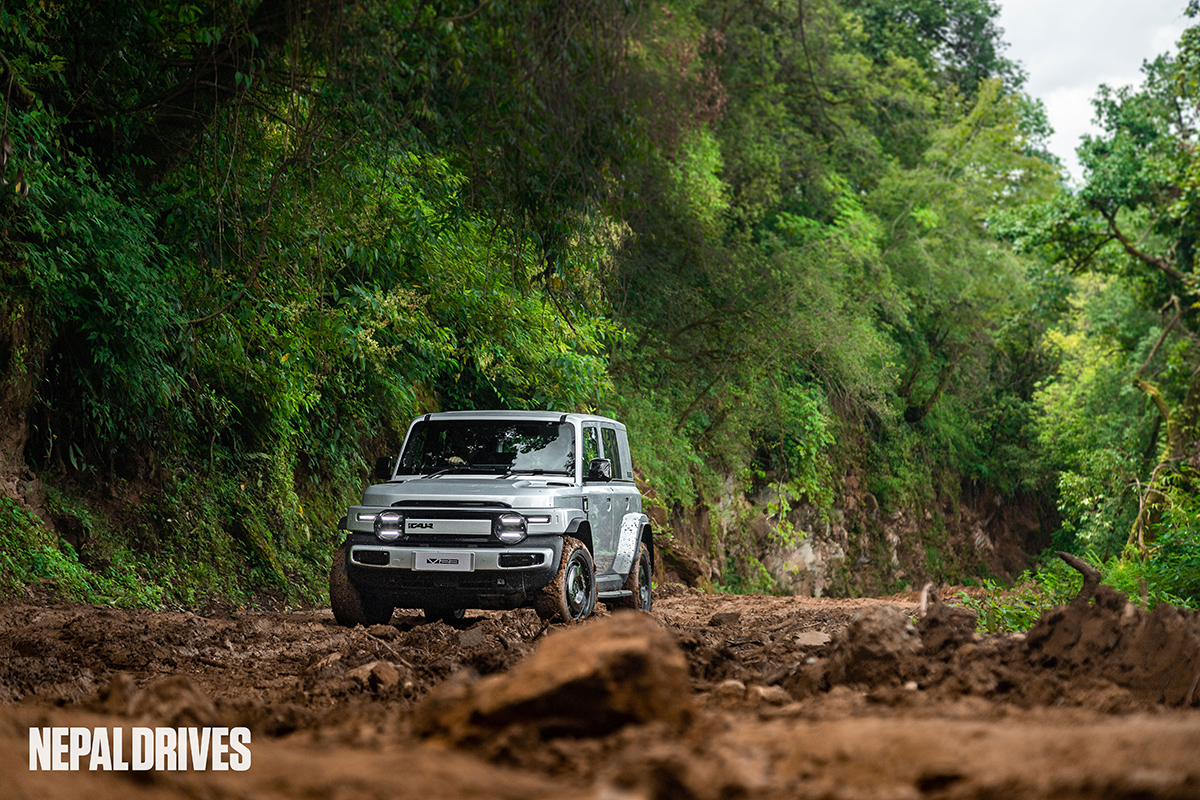
Ground clearance? More than adequate at 205 mm. Approach and departure angles? Strong at 43° and 41°. On paper—and in most real-world situations—the V23 has the credentials to be a capable off-roader.
Where it falls short is the tyres.
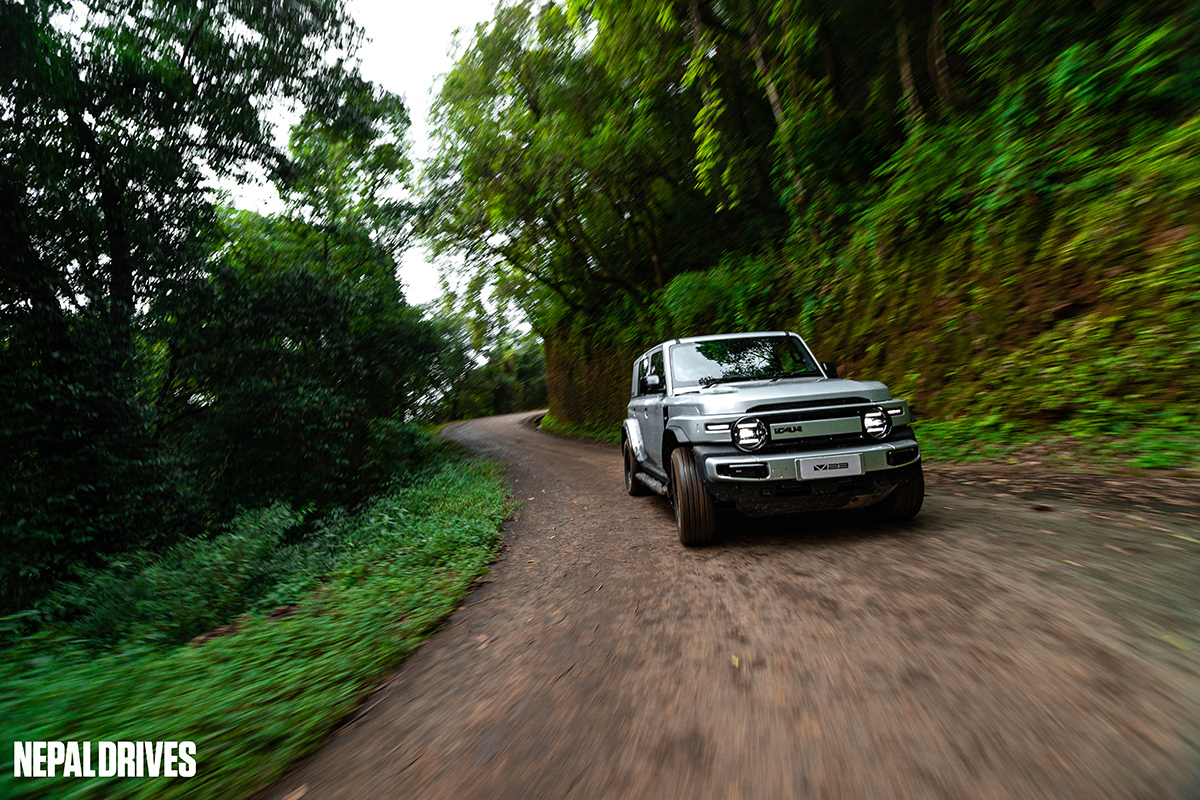
For something that looks this ready to leave the asphalt behind, the factory-fitted Chaoyang tyres struggle in serious mud. On dry dirt or mildly wet trails, they’re acceptable. But in deep, sticky monsoon mud—like what we encountered on the upper stretches of the Phulchowki climb—the V23 got stuck.
To be fair, even a motorcycle ahead of us bogged down, so conditions were far from easy. Still, with more aggressive tyres, we’re confident the V23 would have powered through.
The fundamentals are there: ground clearance, geometry, and even a dedicated slippery-surface mode that carefully manages power delivery. The chassis is willing. The drivetrain is willing. But the tyres let it down.
Swap them out for something more capable, and the iCaur V23 starts to feel like a genuinely competent off-roader—not just one that looks the part.
IS THIS A DEAL BREAKER?
Not at all.
Even in this configuration, the iCaur V23 stands out as one of the most interesting and characterful cars we’ve driven in recent times. It’s fun, distinctive, and has that rare ability to make you feel something. Better tyres would simply unlock more of its potential.

An AWD variant—with a second motor up front (the dual-motor version produces 155 kW and 292 Nm)—would take things even further, though at a higher price point.
As it stands, the RWD version is priced at Rs 49.99 lakh and sits in a niche of its own. There’s no direct rival. Cars like the Nammi Vigo, Deepal S05, or Leapmotor B10 might overlap on paper, but none deliver quite the same appeal.
The iCaur V23 is for people who will choose it simply because they want it. And honestly, that’s what makes it special. Because cars aren’t just appliances. Some of them remind us how to smile again. And the iCaur V23 is one of them.
Changan Nevo Q05: Makes Sense
Jetour T2: Ready 2 Rumble
Arcfox T1: Into The Thick of It